
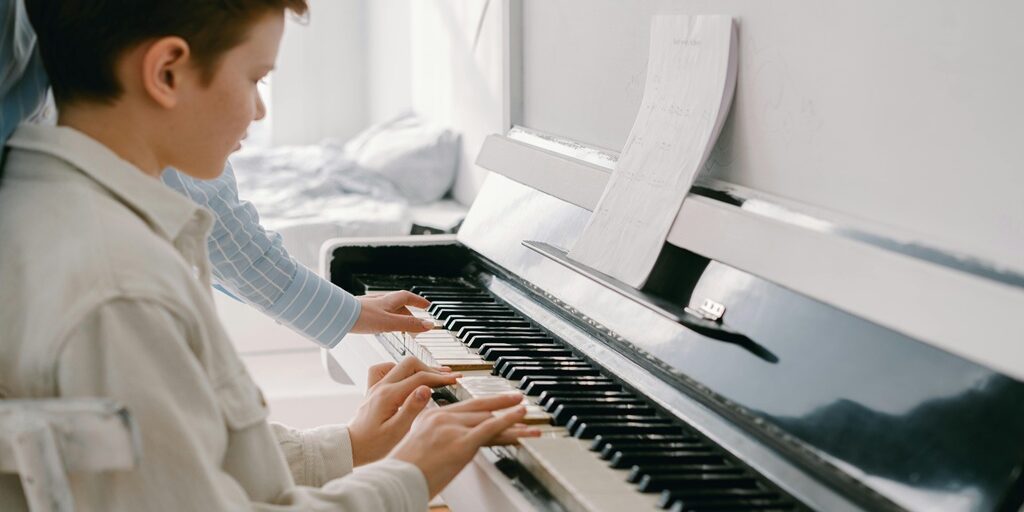
Nothing compares with the sound of a newly tuned piano. The notes ring out crisp and clean, the chords vibrate with depth, and practicing becomes a joy, not a drudgery. As music educators, we frequently observe students becoming disheartened not because they are playing the wrong notes but because their playing sounds wrong no matter how accurately they play. An optimally tuned musical instrument is essential for developing good musical ears and for making the learning process a joy.
As a piano owner in your home, you are essentially the keeper of a living machine. It is a delicate process to keep it running in tip-top shape. As either a parent to a new piano student or an adult seeking to return to the piano keys yourself, having a basic understanding of how to keep a piano running well is essential. If you are searching for Chara music lessons in Friendswood, TX, understanding piano care is just as important as practicing daily.
Importance of Piano Tuning
You may wonder why the piano goes out of tune even if it is not being used very much. It is not the playing that causes the problem but the environment. Your piano is mostly made of wood and felt. Both of these materials are very sensitive to changes in the environment. The sound board that projects the vibration of the strings expands when the atmosphere is humid and contracts when the atmosphere is dry.
This process of expansion and contraction causes the tension in the strings to fluctuate. With the expansion of the soundboard, the pitch becomes sharp, and with the contraction, the pitch becomes flat. The tension in the strings is so great, with a combined pressure of about 20 tons on the frame, that any variation, no matter how small, in the wood can cause drastic changes in the pitch. Tuning is therefore required to compensate for this variation and get the pitch right.
How Often to Tune a Piano
A general rule of thumb that is recommended by the major piano manufacturers is to tune a piano at least twice a year. This will usually take into consideration the changes of humidity that occur throughout the year, usually once with the start of winter and again with the humidity change of the summer season. By doing it this way, it will help to maintain your piano relatively close to the standard of A440.
However, brand-new pianos need more maintenance. For a piano in its first year of life, it is still undergoing string stretching. At this point, we advise that it be tuned up to four times. Piano tunings performed regularly ensure reliability. Failure to maintain a brand-new piano results in problems of pitch variation, which are hard to remedy at a later date. Similarly, concert pianos or pianos in our learning institutions are tuned more often to ensure they are always in perfect playing condition.
Is It Possible to Tune a Piano on Your Own?
So, how do you tune a piano? In today’s world of do-it-yourself videos on YouTube and apps on our smartphones, it may be very enticing to save money by doing it yourself when it comes to tuning a piano. Sure, you can purchase a piano tuning lever on Amazon and download software on your phone to aid you in detecting pitch. But we highly recommend not doing so if you are a piano owner. Piano tuning is an art that takes years to perfect.
The actual process of turning the tuning pin demands a certain skill to “set” the pin in place so that it does not come loose right away. Inexperienced fingers can easily damage the pin block, which is a disaster that is costly to repair. In addition to that, overtightening a string results in its breaking, which is hazardous to you and harmful to the piano. It is a subtlety that demands professional training.
When to Hire a Professional Piano Tuner
It is recommended that whenever you feel that your piano is sounding off-key or when keys are not functioning properly, you should consult a professional. A Registered Piano Technician, or RPT, does more than just tune a piano. They will also look into what is called the “action” of the piano, which refers to the mechanical part of a piano that causes the hammers to hit the strings.
If your keys are sticky, heavy, or have some kind of imbalance, a professional piano tuning expert can adjust the action so that it will play smoothly. They can also “voice the hammers.” This means adjusting the felt so that the piano will have a bright sound or a mellow sound. For the piano’s protection and the quality of the sound, it’s always best to call a professional.
Keep Your Instrument Singing
Taking care of your piano is a crucial part of being a musician. A piano that is perfectly tuned can promote practice, assist a child taking lessons at Chara, and bring beauty and music to your home. If you are unsure about the condition of your piano or would like a referral on a good piano technician in your area, do not hesitate to contact us!

Shanna Kirkpatrick Logo