
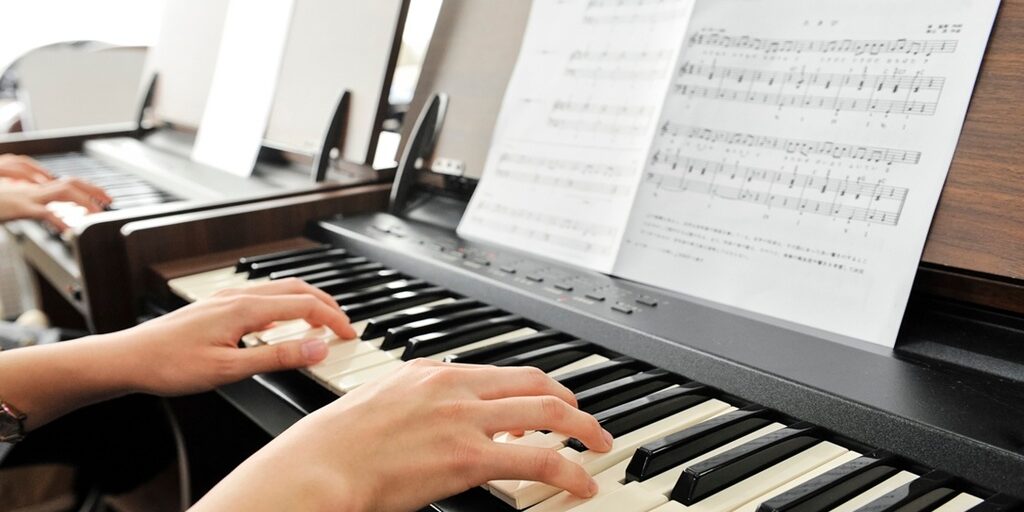
As we introduce our new students to the world of the piano for the very first time, there is always an air of wonder. The mere size and polish of the piano, together with the inviting keys of both black and white, is sufficient to amaze anyone. For the parent and the new student, the piano is often a mysterious machine. Among the most frequently asked inquiries we receive, as teachers of new students, is one pertaining to the keys themselves. This is the actual number of keys on a piano it contains.
Learning the piano layout is the starting point for demystifying the theory of music for our students at Chara. Whether you are looking to purchase a piano for personal enjoyment within your household or are attempting to understand what your child is learning within their piano lessons near you, it is crucial that you understand the different parts of a standard piano.
The staff of Chara is of the belief that the most powerful ally for a musical genius is, in fact, the educated parent, and we will be explaining the function of a standard keyboard today!
The Standard Count: 88 Keys
Stepping into any music hall, any university practice room, or even our own music studio, it is guaranteed that there is one piano with a total piano number of keys – 88 keys. This has been the standard answers to how many keys are on a piano for over a century. It is worth noting that pianos before this era had fewer keys. These pianos include the harpsichord and the fortepiano, but this was a long time ago.
This is a huge plus for our students. What that means is that regardless of whether they’re practicing on the upright piano in a home or performing on a nine-foot concert grand piano during a recital, the geography of the piano is the same. They know that the lowest note and the highest note is exactly where it is supposed to be. Even though digital keyboards occasionally may be smaller and have 61 or 76 keys, we always encourage families to work toward having the 88-key keyboard so that the child can learn the correct geography from the very start.
Breaking Down the Black and White
In order to fully understand the keyboard, it is necessary to examine the pattern of these 88 keys. This pattern is not random, but rather it follows a pattern that is repeated throughout the length of the keyboard. How many white keys are on a piano? 52 white keys. How many keys on a piano are black? 36 black keys.
The white keys, which are often referred to as the naturals, represent the musical alphabet. They include the letters A, B, C, D, E, F, and G. The black keys, which are referred to as the accidentals or sharps and flats, are raised and reversed on the keyboard. We teach our pupils how to position themselves on the keyboard through the black keys.
The black keys appear alternately as two and three. This is basically the method through which pianists position themselves on the keyboard. For example, to position oneself on the key C, one needs to position on the key to the left of the two black keys. Without the unique arrangement of black and white keys on the keyboard, the keyboard would just be a jumble of similar-looking keys.
How many keys are on a piano? You’re starting to build a better understanding.
Why Do We Need 88 Keys?
The 88 keys cover a range of seven octaves and a minor third, from a low A, or Sub-contra A, to a high C, or 5-line C. Such a vast range covers the whole range of frequencies of the typical orchestra. The lowest keys on a piano go lower than the double bass, and the highest keys come near to the piccolo.
We need 88 keys because they cover the range of human hearing that is musically significant. While some manufacturers of keyboards have been experimenting with the addition of keys in the bass or treble range, the standard has been maintained at 88 keys because they encompass the whole of music written for the piano, from Beethoven to the latest popular songs. 88 keys give our students the ability to play any song they want.
Begin Your Musical Journey
Knowledge is the beginning of the mastery of the art. The piano is a marvelously logical instrument, and those 88 keys are an endless world of creative expression. It gives us pleasure at Chara to watch our students blossom from discovering their first Middle C to playing the entire piano with ease and flair. Are you ready to watch your child explore what they can do with those 88 keys? We are ready to help your child along the way!

Shanna Kirkpatrick Logo