What Is Acro Dance? A Parent’s Guide to This Athletic Dance Style
Does your child love trying cartwheels, balancing upside down, or finding new ways to move? Acro dance combines the creativity of dance with the strength and athleticism of acrobatics, giving students an opportunity to explore both interests in one class.
For parents considering acro, understanding what happens in class—and how students progress—can help you decide whether it’s a good fit for your child.
What Is Acro Dance?
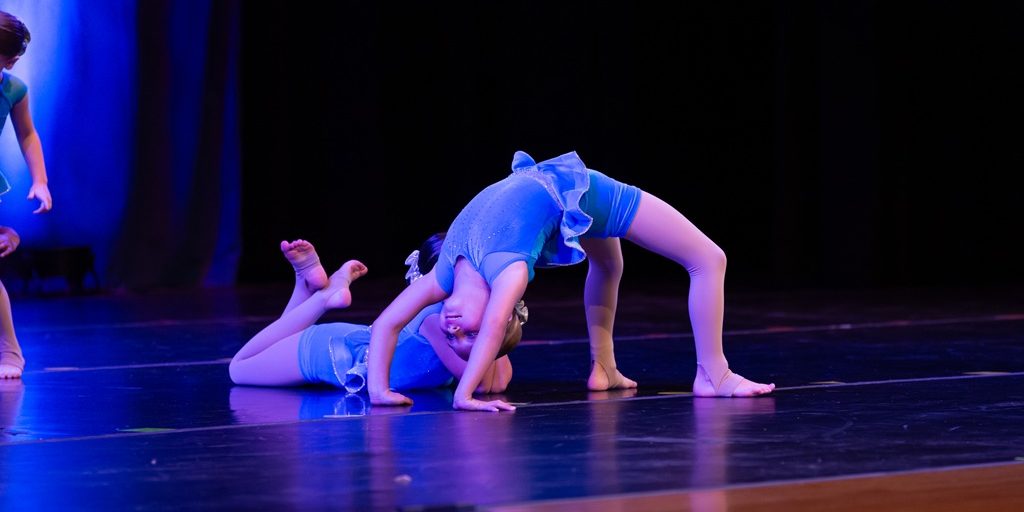
Acro blends dance technique with flexibility, balance, tumbling, and controlled acrobatic movements. Students learn more than individual tricks: they practice connecting those skills with choreography so their movement flows naturally.
For example, a dancer might transition from a dance sequence into a cartwheel and return smoothly to the choreography. The goal is to combine strength and control with musicality and artistry.
What Happens in an Acro Class?
Acro classes build the physical foundation students need as they develop new skills. Each class includes:
- A thorough warm-up to prepare the body for movement.
- Flexibility and strength training to develop mobility and control.
- Balance and conditioning exercises that strengthen body awareness.
- Acrobatic skill progressions that break movements into manageable steps.
- Dance combinations that help students connect their skills with choreography.
While learning a new trick can be exciting, the preparation behind it is an essential part of class.
What Skills Will My Child Learn?
Depending on their level and readiness, dancers may work toward skills such as cartwheels, handstands, walkovers, aerials, handsprings, and more.
These are skills students build toward over time, rather than a checklist every dancer will complete right away. Instruction follows a progression, allowing students to establish a strong technical foundation before advancing to more difficult elements.
Learning to control a balance, support their body weight, or finish a movement with proper placement is meaningful progress, too.
Does My Child Need to Be Flexible or Know Tricks Before Starting?
Developing flexibility, strength, and coordination is part of learning acro. Your child does not need to have mastered the skills listed above to begin exploring the style.
The key is finding an appropriate class for their current experience and abilities. Chara’s team can help you understand class options and determine a suitable starting point.
What Are the Benefits of Acro?
Acro helps dancers develop core strength, flexibility, balance, coordination, and body awareness. Students practice using these abilities together as they move through increasingly challenging skills.
The learning process also gives dancers opportunities to build confidence and persistence. Working through a progression teaches them that improvement takes practice—and that smaller accomplishments help prepare them for bigger goals.
How Does Acro Approach Safety?
At Chara, acrobatic skills are taught through safe, progressive instruction. Students build foundational strength, control, and technique before moving toward more difficult elements.
Progress depends on readiness. A dancer’s ability to perform a foundational movement consistently matters more than rushing to attempt the next trick.
Is Acro a Good Fit for My Child?
Acro may be a great fit for a child who enjoys physical challenges, loves learning new skills, and wants to combine athletic movement with dance.
It can also appeal to dancers who enjoy setting goals and practicing toward them. Because acro involves both foundational exercises and choreography, students should expect to spend time building strength and control alongside learning exciting skills.
Interested in acro at Chara? Visit charadance.com or contact our team to learn about class options and find the right starting point for your dancer!