
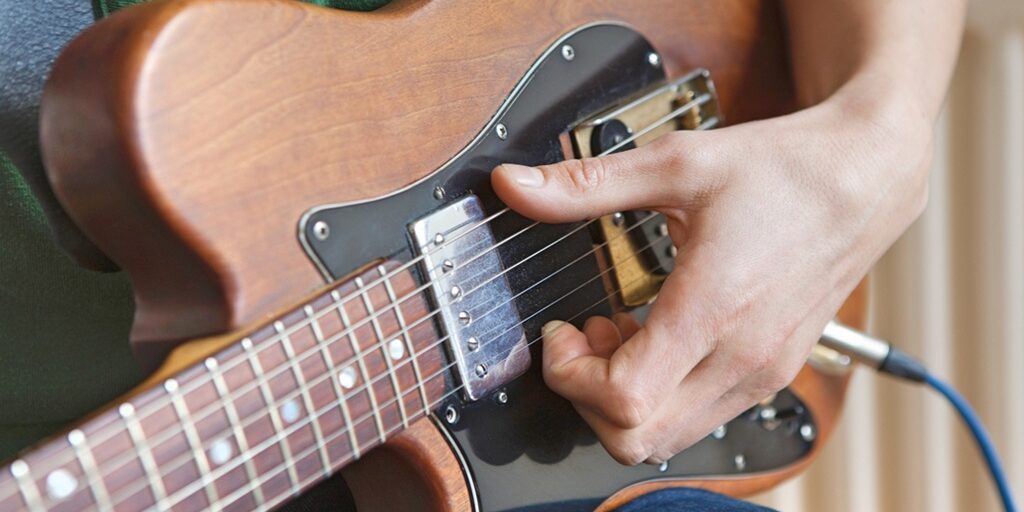
Of course, we have all heard this story in our own practice studios. The student has practiced all week, and when it is time for them to play, the music is simply not right. The fingers are in the correct places, and the rhythm is correct, but the melody is nothing like it should be, and the problem, more often than not, is related to tuning.
Playing an untuned guitar is very demoralizing for a child learning to play one. This is because they feel they are wasting their time because they are not producing music. For parents listening in the other room, it is even more frustrating. One of the first questions a musician must learn to answer is…how do you tune a guitar? At Chara, we believe that preparing to play is just as important as practicing chords and scales. This tutorial will assist you in getting back on target so you can practice without frustration.
Picking the Appropriate Tool for the Task
Before you can go on to the tuning pegs, you will need a reference point. You can tune by ear if you are a trained musician, but we do suggest using a digital instrument. There are a few different models you might find.
The tuner of choice for beginners would be the clip on tuner. This tuner clips on the head of the guitar and detects the vibrations of the wood, not the sound, so your child can tune a guitar even with the TV on. The pedal tuner would be better suited for electric and would come with a cable, so it would be a bit more complicated for the beginner.
The next one would be smartphone apps. They are very convenient because you most likely always have your smartphone on you. The only problem with this method would be that you would have to be in a very quiet room to get a good reading. Then there are various websites on the internet that you can tune on if you are sitting at your computer.
Tuning Instructions
The method for learning how to tune a guitar with a guitar tuner is very easy once you understand the communication process. The first thing you do is turn your clip tuner or app on. You will likely be tuning to “Standard Tuning,” which consists of the notes E, A, D, G, B, and E, in order from thickest to thinnest strings.
First, begin to pluck the Low E string, which is the thickest string. Now, look at your tuner display. You should see that it displays the letter E. However, if it displays another letter, then you need to adjust your string greatly until it displays the letter E. Now, once your display shows that it has the correct letter, look at your needle or your light bar display.
If the needle indicates that you are pointing to the left, it indicates that the note played is flat, and its pitch is low. To rectify this, you would have to turn the peg away from you. This would result in you tightening the string. Turn the peg while constantly plucking the string to get the desired increase in the pitch. If you are pointing to the right, it indicates that you played a sharp note, and its pitch is too high. To rectify this, you would have to turn the peg towards you.
Your goal is to position the needle exactly at the middle point. Most of the tuner units will light up green or change colors as you tune into the precise note. Once you have completed the Low E string, you would proceed to the next thickest string, which is A. This would follow for D, G, and finally High E.
Troubleshooting Tuning Issues
Sadly, sometimes things don’t go as expected. One of the most common mistakes we’ve noticed our students make is turning the wrong peg. This could mean they’re picking the A string while turning the D string. This, as you may know, could result in the breaking of the string because it is turned beyond its capacity. Our advice to our students is to follow the string with their eyes all the way to the peg before turning it.
Another common problem is when the tuner is oscillating strongly or failing to get the note. This is usually happening when the student is pulling the string strongly or when the student is allowing other strings to ring at the same time. Instruct your child to use their hands to damp other strings and pull the string softly.
The Music Must Sound Sweet
Developing the habit of tuning will take a while to develop. What we want to propose to you, as parents, is that you work on it with them until they can do it on their own, which of course will take a few months to develop strength in their hands and their ear to be able to do it on their own. Eventually, tuning will make practicing a fun experience and keep the whole house happy.
In case you ever find yourself wondering if you are doing it right or not, please bring it to the next lesson, and we can show you how to do it. For anyone looking to improve their skills further, we recommend the best guitar lessons in the Pearland area at Chara!

Shanna Kirkpatrick Logo