What if my child cries or does not like it right away?
What should I do if my child cries at their first dance class? (Quick answer for parents)
This is the moment most parents worry about.
You walk your child into class… and instead of excitement, they cling to you, tear up, or refuse to go in.
If that happens, here’s the honest answer: it’s completely normal—and it doesn’t mean dance isn’t right for them.
In fact, we see this all the time.
Most kids who cry on day one are reacting to something new, not rejecting dance itself. A new room, new teacher, new expectations—it’s a lot all at once.
The best thing you can do?
- Stay calm
- Keep your response steady
- Trust the process for a few classes
As the owner of Chara Christian Dance Academy and a mom myself, I know exactly how it feels to have crying dancers. My daughter did the same thing the first few months of dance. She is now a thriving dancer who would rather be at the studio than at home most days.
I’ve worked with a lot of families in this exact situation, and what makes our approach different is that we don’t treat this as a problem—we treat it as part of the process.
In this guide, I’m going to walk you through exactly what’s normal, what’s not, and how to handle it so you can make the best decision for your child without second-guessing yourself.
Is it normal for kids to cry or refuse dance class at first?
Yes. Very normal.
Especially for younger kids (ages 2–6), crying or hesitation is one of the most common first-day reactions.
Why?
Because dance class includes a few big changes all at once:
- Separation from parents
- A structured environment
- New authority figures
- Other kids they don’t know
According to the American Academy of Pediatrics, separation anxiety is a normal developmental stage, especially in early childhood (https://www.healthychildren.org).
Even kids who were excited in the car can change quickly once reality hits.
At our Friendswood and Pearland studios, we see this daily; it is a normal part of building independence, and tears usually dry up once the music starts. We encourage a “quick goodbye” and consistent attendance, as most children settle in and find their rhythm by the third week. A shaky start is never a reflection of a child’s long-term potential or love for dance.
The key takeaway: a rough first class is not a reliable signal of long-term interest.
Why does my child suddenly not like dance after being excited about it?
This catches a lot of parents off guard.
Your child talks about dance all week… then freezes or resists when it’s time to go.
Here’s what’s happening:
Expectation vs reality
In their mind, dance might look like free play or constant fun. In class, there’s structure, listening, and following directions.
Overstimulation
Music, movement, other kids—it can feel overwhelming at first.
Loss of control
At home, your child sets the pace. In class, they follow someone else’s lead.
These reactions don’t mean your child “doesn’t like dance.” It usually means they’re adjusting to something new.
Example of adjusting expectations: At the start of class, I saw a dancer who had been so excited all week suddenly freeze at the doorway, unsure and overwhelmed. After a few minutes of watching through the window with reassurance from mom, something clicked and they remembered this was the class they had been looking forward to. After a deep breath and a hug from mom, the dancer walked in and joined us, showing just how powerful a moment to gather ourselves and let the excitement come back to us can be.
How long does it take for a child to adjust to dance class?
Most kids don’t fully settle in on day one.
Here’s what we typically see:
- Week 1–4: Hesitation, clinging, or tears
- Week 4-8: Participation begins to improve
- Week 8+: Comfort, routine, and enjoyment
Some kids adjust faster. Others take longer.
What matters is progress—not perfection.
If your child is slowly becoming more comfortable, that’s a good sign.
“Every dancer’s journey looks a little different, and one of the most important things I’ve learned over the years is to trust the timeline. I’ve seen this exact scenario play out time and time again, and one sweet Tippy Toes dancer stands out as such a beautiful example of what patience and consistency can do.
She started the season with lots of tears—those first few classes were tough. She would cry through most of class, needing breaks with mom before finding the courage to come back in. Week by week, though, there was progress. The tears didn’t disappear overnight, but they lessened—eventually only lasting the first 5–10 minutes. Her mom stayed patient, encouraging her without rushing the process. And then one day, something clicked. She walked right into class with no tears, participated fully, and absolutely shined.
Now, she’s our eager beaver—first in line at the door and full of excitement every single week. It’s such a powerful reminder that growth doesn’t always look immediate or linear, but when we give dancers the time and space they need, incredible transformations happen.” – Ms Madi
Should I stay in the room or leave if my child is upset?
This is one of the toughest decisions for parents.
And it depends on the studio’s structure.
In our experience, stepping out actually helps your child settle faster.
Why?
Because when you stay:
- Your child may rely on you instead of the teacher
- Transitions become harder
- Emotional moments can last longer
When you leave:
- The teacher becomes the guide
- Your child adapts more quickly
- Independence starts to build
That said, some studios allow viewing areas or gradual transitions.
At Chara Christian Dance Academy we recommend that the parent be out of eye-sight of the dancer. Our expert staff can then work their magic and the process of independence begins.
The goal isn’t to force separation—it’s to support your child in building confidence.
What do dance teachers do when a child cries in class?
A good dance teacher expects this.
This isn’t new or surprising—it’s part of teaching young kids.
Here’s what experienced instructors typically do:
- Gently redirect attention to the activity
- Offer encouragement without pressure
- Give the child space when needed
- Keep the class moving without making the child feel singled out
They’re trained to handle emotions while still maintaining structure.
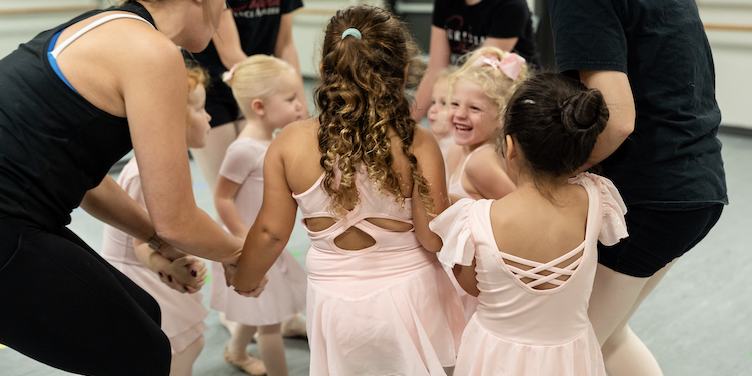
Example of our approach: If a student feels nervous or overwhelmed, our instructors often pair them with a “buddy” who is already confident with the steps, or they invite the child to sit near them for a moment to watch and participate from the sidelines until they feel ready to join the class again. We find that giving them the choice to participate at their own pace almost always leads to a confident return to the dance floor.
If a teacher seems frustrated or dismissive, that’s a red flag.
The right environment makes all the difference.
How can I help my child feel more comfortable in dance class?
What you do outside of class matters more than you think.
Here are simple ways to help:
Before class
- Talk positively about what to expect
- Keep explanations simple
- Avoid overhyping or overexplaining
During drop-off
- Keep goodbyes short and confident
- Avoid lingering or negotiating
After class
- Focus on effort, not performance
- Ask simple questions like “Did you have fun?”
Consistency is key.
Parents who are consistent in their child’s weekly attendance set their dancer up for success. Children thrive on routine and dance is no different. Make class attendance a priority even when it is hard.
What are signs my child just needs time vs dance isn’t the right fit?
This is where parents start second-guessing themselves.
Here’s how to tell the difference:
Signs they just need time:
- They calm down after you leave
- Each month gets easier
- They talk positively about parts of class
Signs it may not be the right fit:
- Months of distress with no improvement
- Strong resistance before every class
- No moments of enjoyment at all
Even then, it may not be “dance” they dislike—it could be the environment.
Styles of dance can really make a difference when the child is ages 5 and above. For some children the calm and controlled environment is not energizing to them. They may be a better fit for a jazz, tap, or hip hop class. Trying a variety of styles can help your dancer find their sweet spot.
What if my child refuses to go back after the first class?
This is common—and it’s a delicate moment.
Here’s how to handle it:
- Acknowledge their feelings (“I know it felt scary”)
- Keep expectations steady (“We’re going to try again”)
- Avoid turning it into a negotiation
Kids often resist what feels unfamiliar.
Giving up after one class doesn’t give them a fair chance to adjust.
At the same time, forcing without support can backfire.
When my daughter was young I found that the fewer words I said the more successful we were at integrating into the classroom. Children like to negotiate and delay. Acknowledging their feelings but not engaging in unproductive conversations with little ones let them know that we are going to try again and help them prepare for independence.
Will forcing my child to continue dance make it worse?
There’s a line between encouragement and pressure.
Encouragement sounds like:
- “Let’s give it a few more tries”
- “I’ll be right here when you’re done”
Pressure sounds like:
- “You have to do this”
- “Stop crying and go in”
Kids respond very differently to each.
The goal is to help them build resilience—not create fear.
[Insert insight about balancing consistency with empathy.]
“It’s very common to hear a child say they want to quit after a tough day—especially when they’re trying something new, like a different genre or moving up to a more challenging level. When things feel harder than expected, it can be uncomfortable, and their first instinct may be to step away. But if we allow them to quit in that moment, we’re often cutting off an opportunity for real growth.
Working through challenges and honoring a commitment teaches kids so much more than just dance skills—it builds resilience, confidence, and a growth mindset. They begin to understand that it’s okay for things to be hard and that improvement comes with time, effort, and perseverance. Sometimes what they need most is a gentle but firm encouragement to keep going, even when they feel unsure or out of their comfort zone.
Those moments of pushing through are where the magic happens. Not only do they grow as dancers, but they also develop life skills that will serve them far beyond the studio.” – Ms Madi
Do most kids end up loving dance after a rough start?
In many cases, yes.
Some of the most confident dancers started out as the most hesitant.
The turning point usually happens when:
- They feel familiar with the routine
- They connect with the teacher
- They build friendships
First impressions aren’t always accurate—especially for young kids.
At the beginning of the year, I watched a dancer walk into class unsure and hesitant, still trying to find their place in the classroom setting. As we built a connection and the routine became more familiar, I saw their confidence grow and their joy begin to shine through. Now, that same dancer comes into class with excitement, a reminder of how trust and consistency can truly change how a young dancer feels in the classroom.
How to choose a dance studio that supports shy or nervous children
Not all studios handle this well.
Here’s what to look for:
- Patient, experienced instructors
- Clear structure without being rigid
- A welcoming, low-pressure environment
- Transparent communication with parents
And here’s what to avoid:
- Teachers who dismiss emotions
- High-pressure environments for beginners
- Lack of communication about expectations
At Chara, we prioritize the individual artistic identity and emotional well-being of every child, ensuring that mistakes are celebrated as opportunities for discovery rather than moments of pressure. Our teachers focus on fostering intrinsic motivation, using positive reinforcement and structured transitions to help hesitant dancers feel safe enough to find their own creative voice at their own pace. By maintaining a high-energy yet low-stress atmosphere, we transform the studio into a second home where even the shyest students feel empowered to step onto the floor.
FAQ: Parents’ biggest concerns about kids struggling in dance class
Should I pull my child out if they cry every week?
Not right away. Look for gradual progress over a few weeks before deciding.
Is my child too shy for dance?
No. Dance can actually help build confidence over time.
What if they disrupt the class?
Teachers are trained to manage this. It’s part of the job.
Can we try again later?
Yes. Timing matters. A break can sometimes help.
Final thoughts: what your child’s first dance experience really means
A rough start doesn’t mean the wrong choice.
It usually means your child is learning something new—and that takes time.
The goal isn’t a perfect first class. It’s growth over time.
“I’ve seen this play out so many times in the studio, but one moment always sticks with me. I had a dancer who left her very first class in tears, convinced dance “wasn’t for her.” Everything felt unfamiliar, and she had to try harder than she expected. It would have been easy to walk away right then and assume it just wasn’t the right fit.
But her family gave her time. They didn’t expect perfection—they trusted the process. Week by week, things got a little easier. The movements started to click, her confidence grew, and that same dancer who once hesitated at the door began to walk in with a smile. Before long, she wasn’t just participating—she was thriving.
That experience is such a powerful reminder: the goal isn’t a perfect first class. It’s growth over time. Sometimes the hard beginnings are actually the very first sign that something meaningful is taking root.” – Ms Madi
If you’re still unsure, the best next step is simple:
Come see how your child responds in a real class environment.
Talk to the instructor. Ask your questions. Watch how your child interacts.
Or, if you’re ready to take the next step:
Schedule a trial class with us today. We’ll guide you through the process, support your child through those first moments, and help you decide if dance is the right fit—without pressure or guesswork.